For a long time, that assumption held. But it no longer does.
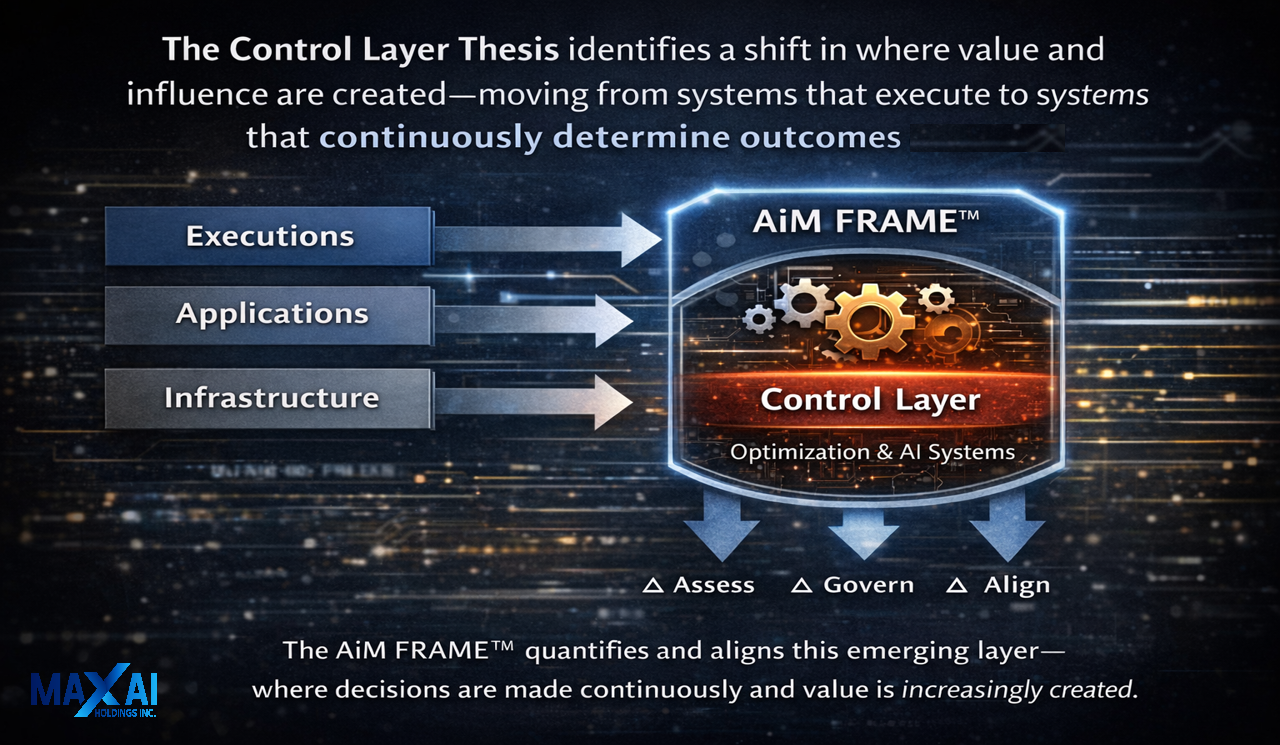
A structural shift is underway. It’s quiet, largely unrecognized, but increasingly consequential. Systems are no longer defined solely by what they execute. They are becoming defined by what they decide.
Across digital platforms and physical environments, a new layer has emerged. It does not sit neatly within any single application, nor is it owned in the conventional sense. It operates across systems, continuously evaluating conditions, selecting actions, and adjusting behavior in real time.
This is the control layer.
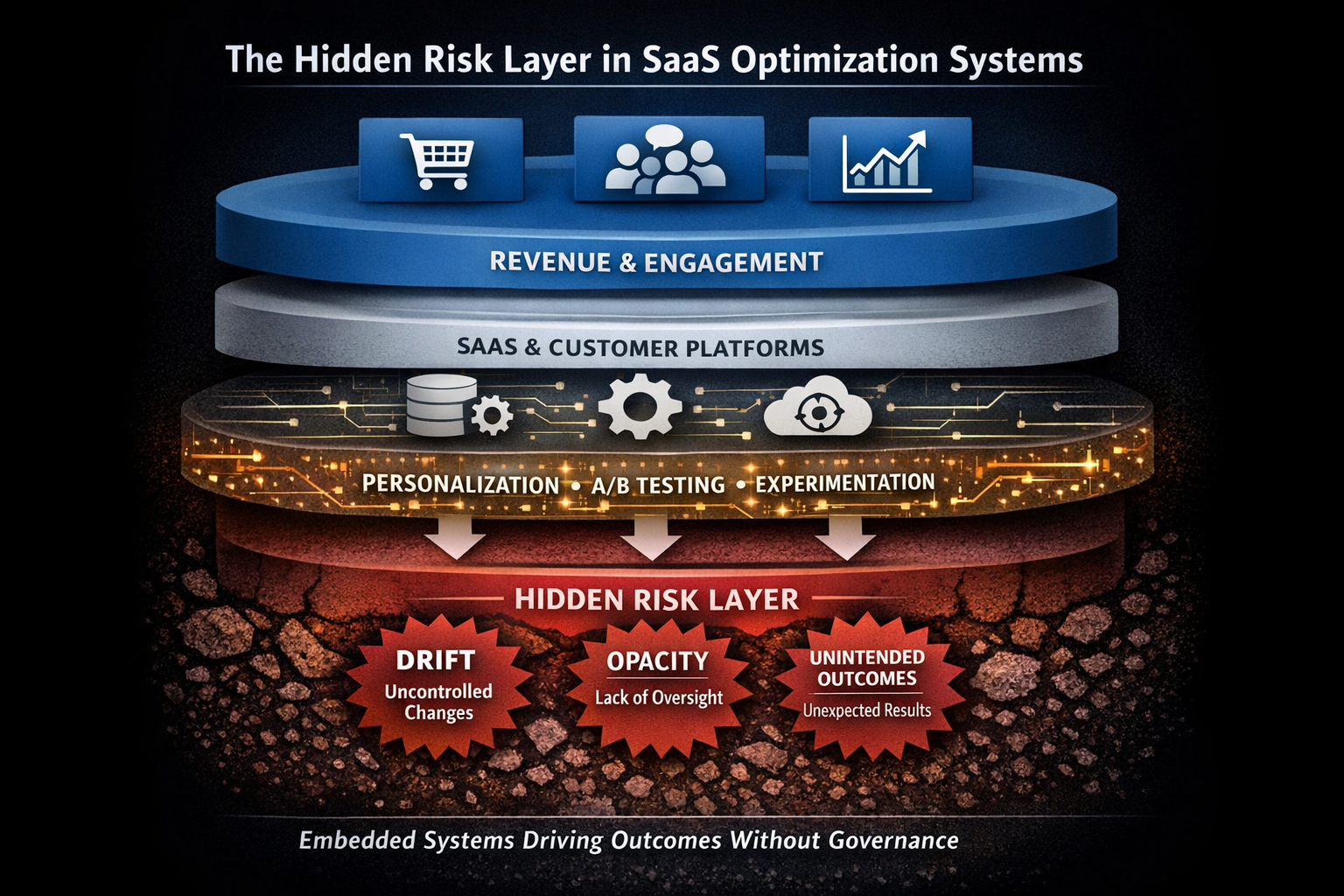
It began as something modest. Optimization was once a supporting capability—a way to improve performance, test variations, or refine outcomes at the margins. A/B testing frameworks, personalization engines, and rule-based decision systems were introduced to enhance efficiency and increase effectiveness.
But over time, these systems evolved. They became persistent. They became interconnected. And most importantly, they became continuous.
What was once periodic experimentation has transformed into always-on decision-making. Systems no longer wait for human input to determine what happens next. They evaluate, select, and act—repeatedly, and at scale.
The implication is subtle but profound.
Control is no longer located in the systems that execute tasks. It is migrating to the systems that determine which tasks are executed in the first place.
This distinction matters. Execution follows instruction. Decision determines direction.
And direction is where control resides.
Today, this shift is already visible in environments where outcomes matter most. Digital platforms rely on continuous optimization to shape user experience and drive revenue. Infrastructure systems increasingly incorporate AI-driven decision support to manage performance and efficiency. Operational environments—particularly those tied to physical systems—are beginning to integrate feedback-driven mechanisms that influence real-time behavior.
In each case, the same pattern emerges: the system that decides begins to matter more than the system that executes. Yet most organizations continue to operate as if control remains where it has always been.
This creates a gap.
Decisions are being made in places that are not fully understood, not consistently governed, and not always visible. Outcomes are influenced by systems that adapt over time, often without clear attribution. Authority becomes diffuse, even as impact becomes more concentrated.
In critical environments, this is not simply a technical issue. It is a question of resilience, security, and trust.
When systems begin to decide, governance must evolve. But governance is only part of the story. There is also a strategic dimension.
As this control layer becomes more embedded, it creates a new form of dependency. Systems that rely on continuous optimization cannot easily revert to static operation. The ability to adapt, refine, and respond in real time becomes integral to performance.
Over time, this layer becomes difficult to isolate, difficult to replace, and increasingly central to how outcomes are shaped.
This is where leverage begins to form.
The organizations that recognize this shift early will not simply improve their systems. They will understand where control is actually exercised. They will identify the points at which decisions are made, not just where actions are executed. And they will begin to align governance, strategy, and investment with this new reality.
Those that do not will continue to operate under assumptions that no longer hold.
They will secure infrastructure but overlook decision pathways. They will manage applications but miss the mechanisms that shape outcomes. They will believe they are in control, even as control moves elsewhere.
This is not a future scenario.
It is already happening. The question is not whether this shift will occur. It is whether it will be recognized in time to respond to it.
Because in the environments now taking shape, control is no longer defined by ownership of systems. It is defined by the ability to influence outcomes.
And that ability is moving.